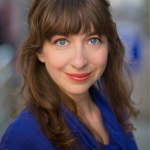
- Sharyn Rothstein
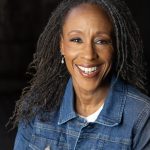
- Nick Chase
- January 10 - February 14, 2026
- January 8-9
- Buy Now
“That’s a pretty strong word for a book you haven’t read. But then, even a vile book can change you.”
A National New Play Network Rolling World Premiere
A Co-Production with Local Theater Company
All it took was one concerned mom, one very questionable book, and one extremely patient librarian. As tensions rise and tempers flare, what starts as a simple question about “appropriate content” turns into a spirited—and surprisingly heartfelt—debate about parenting, protection, and the power of a good story. With sharp wit and a whole lot of heart, Bad Books takes a comedic look at the messiness of motherhood, the madness of modern outrage, and the quiet heroism of librarians everywhere.
Bad Books is produced at Curious Theatre Company as part of a National New Play Network Rolling World Premiere. Other Partner Theaters are Florida Studio Theatre (Sarasota, FL), Round House Theatre (Bethesda, MD), and Williamston Theatre (Williamston, MI) with additional support from The David Goldman Fund for New American Plays. For more information, please visit nnpn.org
For Tickets to the Boulder run from February 5-14, 2026, click the button below
Boulder Show TicketsDigital Playbill here
CONTENT ADVISORY:
Curious provides public advisories about any stage effects that may be of concern to patrons’ health.
We also offer voluntary advisories about subject matter. If you would like to read the full content advisory for BAD BOOKS, click “Details” below.
Details
This play contains references to suicide, and a theatrical firearm is displayed onstage. Recommended for age 14+.
However, as sensitivities vary from person to person, if you have any other concerns about content or age appropriateness that might have a bearing on patron comfort, please contact the Box Office at 303.623.0524.
Dates & Times
| Date | Time | Additional Information |
Production Team
Sponsors
Richard & Joanne Akeroyd
Lynne & Jon Montague Clouse
GO DEEPER: BAD BOOKS
by Sharyn Rothstein
Compiled by Christy Montour-Larson
ABOUT THE PLAYWRIGHT: Sharyn Rothstein
Understanding the artist behind the play helps illuminate why Bad Books refuses easy answers and instead lives in moral tension, empathy, and consequence. Rothstein has spoken about her desire to write a play that resists polemic and debate, focusing instead on what happens when people act from certainty—especially within fragile civic spaces like libraries.
- Round House Theatre – “Sneak Peek at BAD BOOKS: An Interview with Sharyn Rothstein” (YouTube)
In this interview recorded during Round House Theatre’s production, Rothstein discusses her desire to write a play that resists debate and instead explores what happens when people act from certainty. She reflects on libraries as fragile civic spaces and on her interest in characters who believe deeply—and dangerously—that they are right.
Click HERE to watch - DC Theater Arts – “Sharyn Rothstein looks at censorship ‘through the eyes of a badass librarian’”(March 29, 2025)
A thoughtful Q&A that centers Rothstein’s refusal to write a polemic. She talks about power, credibility, and why she wanted the play to feel uncomfortable rather than instructive.
Click HERE to read - Sarasota Herald-Tribune – “‘Suits’ series writer tackles book banning in play premiere…”(March 1, 2025)
This interview traces Rothstein’s shift from television to theatre and explores why book banning, parental fear, and public escalation felt like urgent theatrical material.
Click HERE to read - The Sleepless Cinematic Podcast(Apple Podcasts / Everand)
In this conversational episode, Rothstein reflects on Bad Books within her broader body of work, discussing gender, authority, and how communities justify harm in the name of care.
Click HERE to listen
DIRECTOR’S NOTE
To read Nick Chase’s Director’s Note, click HERE.
WHAT IS A “BAD” BOOK?
Who gets to decide what is safe?
Who gets to decide what is dangerous?
And what happens when fear begins to feel like responsibility?
Bad Books unfolds in a familiar American space—a public library—and detonates into something far more volatile. At its center is a collision between two women: a librarian who believes fiercely in access, inquiry, and trust, and a mother who believes just as fiercely in protection, morality, and parental authority.
Both women are intelligent.
Both are wounded.
Both believe they are acting out of love.
The play does not ask us to choose a side.
It asks us to remain inside the collision—and to examine the cost of certainty.
WHO GETS TO DECIDE WHAT IS “SAFE”?
These articles explore the fragile balance between parental authority, professional expertise, and public trust.
- Public Libraries at the Center of the Culture Wars— NPR
This reporting centers librarians as individuals navigating threats, backlash, and the erosion of trust in public institutions. It foregrounds the emotional labor of serving everyone while being accountable to deeply divided communities.
Click HERE to read - Who Should Decide What Kids Read?— PBS NewsHour
A balanced exploration of parental rights versus professional judgment, framed as a question of shared responsibility rather than ideology or outrage.
Click HERE to read
WHEN FEAR BECOMES RESPONSIBILITY
Fear—especially fear for children—can transform care into urgency and conviction into action. These resources examine how and why that escalation occurs.
What Is a Moral Panic—and Why Does It Feel So Urgent? — Vox
Explains how fear rapidly becomes certainty and action, particularly when children and morality are involved. Offers a framework for understanding why people inside a moral panic feel morally obligated to act immediately.
Click HERE to read:
Fear-Based Parenting: Consequences and How to Avoid It — PsychCentral
Examines how fear shapes parental decision-making, often narrowing perception and reducing nuance—even when intentions are loving.
Click HERE to read
WHAT WE LOSE WHEN BOOKS DISAPPEAR
Rather than debating censorship in the abstract, this section focuses on absence—what vanishes when books are removed.
- What We Lose When Books Are Removed— PEN America
This report centers the consequences of removal: whose stories disappear, how identity and belonging are shaped by access, and why absence is often invisible until it is felt.
Click HERE to read
- Books Unbanned — Young people on what restricted access feels like
Click HERE to read:
DISCUSSION QUESTIONS: ENGAGING WITH BAD BOOKS
- At what moment did you feel most aligned with one character—and when did that alignment shift?
What caused that change? - What does “protecting a child” mean in this play?
How do different characters define protection—and what do they fear losing? - Who do you instinctively trust more in this conflict: the parent or the librarian—and why?
What experiences or values shape that instinct? - The play is less interested in who is right than in who is certain.
Where does certainty become a strength—and where does it become dangerous? - When does concern tip into control?
Is that line stable, or does it shift depending on fear and context? - Both women believe they are acting ethically and responsibly.
How does the play complicate the idea of “good intentions”? - How does fear operate in this story?
Who is afraid of what—and how does that fear drive action rather than reflection? - The librarian relies on training, process, and institutional duty; the mother relies on lived experience and moral authority.
Why do these forms of knowledge struggle to coexist? - How does social media transform a private disagreement into a public reckoning?
What changes once an audience is watching? - Rothstein has spoken about how women are punished publicly.
How do gender and motherhood shape who is believed, defended, or condemned in this play? - What responsibility do public institutions have to individuals versus the broader community?
Who bears the risk when those responsibilities conflict? - What is lost when a book is removed—even temporarily?
Is the loss symbolic, emotional, intellectual, or communal? - How does the play challenge the idea that parents always know what is best?
Where does that belief feel grounded—and where does it feel fragile? - The play ends without resolution.
How did that lack of closure make you feel, and what does it ask of you as an audience member? - If one choice in the play had been different, which would you change—and what new consequences might follow?
LIBRARY RESOURCES TO ENHANCE YOUR BAD BOOKS EXPERIENCE
Curated by the Denver Public Library
READ
Why Fascists Fear Teachers: Public Education and the Future of Democracy
by Randi Weingarten
This is a timely defense of public education, arguing that attacks on teachers and schools by extremist groups stem from a fascist tactic to control citizens by undermining critical thinking and independent thought, essential skills taught in welcoming, diverse classrooms. Blending historical context with contemporary examples, the book serves as a rallying cry, showing how public schools foster democracy, opportunity, and tolerance, making educators crucial frontline defenders against authoritarianism and censorship.
That Librarian: the Fight Against Book Banning in America by Amanda Jones
Jones is a compelling narrator with a nearly unbelievable story that is a parable for our divided times. In this nightmarish tale of a small-town battle gone viral, she shows immense courage by standing up to her tormentors and refusing to be silenced.
WATCH
Banned Books, Burned Books: Forbidden Literary Works taught by Maureen Corrigan
This 2023 lecture series from The Great Courses covers literature – from Shakespeare to the dictionary to Winne-the-Pooh – that has been challenged and banned. While the past few years have seen a steep rise in book challenges in schools and libraries, these complaints are not so different from the criticism of 100 years ago. Learn the common reasons people object to books based on morality and religious reasons, the danger in children’s books, and the fight over historical narratives in textbooks.
Skin: A History of Nudity in the Movies
Nudity is a common frequent objection for movies and books that are challenged as inappropriate. Denver Public Library upholds the right of the individual to access information that is controversial, unorthodox, or unacceptable to others. This film is an exhaustive trace of nakedness in films from the silent move era to the moral codes implemented in the 1930s to the #MeToo era changes.
LISTEN
Fear of a Black Planet by Public Enemy
Seeing as censorship and the idea that some topics should be banned are a central theme to Bad Books, the listening accompaniment that immediately came to mind was Fear of a Black Planet by Public Enemy. This was, and still is, a revolutionary album that combats the idea that inequity shouldn’t be challenged. The standout track on the album that relates most directly to Bad Books would be “Fight the Power”.
DOWNLOAD
Banned Together: The Fight Against Censorship dir. Kate Way and Tom Wiggin (2025)
Like Bad Books, Banned Together is about the conflict between people who want to control what others–particularly minors–read, and those who believe in the freedom to read. While Bad Books is fictional, Banned Together focuses on real world teenagers and how they have fought for intellectual freedom.
NATIONAL NEW PLAY NETWORK & ROLLING WORLD PREMIERES
What Is the National New Play Network?
The National New Play Network is a national alliance of professional theaters dedicated to the development, production, and continued life of new plays. Founded in 1998, NNPN works to ensure that new work does not end after a single production, but instead has the opportunity to evolve, deepen, and reach multiple communities.
At the core of NNPN’s mission is the belief that plays grow in conversation with audiences, artists, and geography—and that repeated productions strengthen both the work itself and the field at large.
What Is a Rolling World Premiere?
A Rolling World Premiere (RWP) is a model developed by NNPN in which a new play receives multiple full productions at different theaters, rather than a single “one-and-done” world premiere.
Rather than treating the first production as definitive, the RWP model allows a play to:
- Be staged by different artistic teams
- Respond to different communities and audiences
- Continue evolving through revision and reflection
Each participating theater produces the play within a defined time window, often with the playwright actively engaged throughout the process. No single production is considered the version—the play accrues meaning, depth, and clarity over time.
Why Rolling World Premieres Matter
Rolling World Premieres challenge the idea that a play must be “finished” at its first outing. Instead, they recognize playwriting as a living process and production as a form of ongoing inquiry.
This model:
- Supports playwrights beyond a single opening
- Encourages artistic risk without demanding perfection
- Creates space for revision, listening, and growth
- Builds sustained relationships between theaters and writers
- Honors the fact that different communities hear the same play differently
In an ecosystem where new work is often underproduced and quickly replaced, RWPs offer a longer, more humane arc for new plays.
Articles & Resources: NNPN and Rolling World Premieres
National New Play Network — Rolling World Premiere Program (Official Overview)
An overview of the RWP model, its goals, and how theaters and playwrights participate.
Click HERE to read:
National New Play Network — About NNPN
Background on NNPN’s history, values, and national impact on new play development.
Click HERE to read:
HowlRound Theatre Commons — “What Is a Rolling World Premiere?”
A clear, artist-centered explanation of how RWPs function and why they matter within the contemporary theater landscape.
Click HERE to read:
American Theatre Magazine — Coverage of Rolling World Premieres and NNPN
Articles and interviews examining how the RWP model supports playwrights and reshapes production norms.
Click HERE to read: